
Emergency Storefront Board-Up: What Businesses Should Do After Glass Breaks
168
When storefront glass breaks — from a break-in, a storm, an impact, or hardware failure — the first priority is…
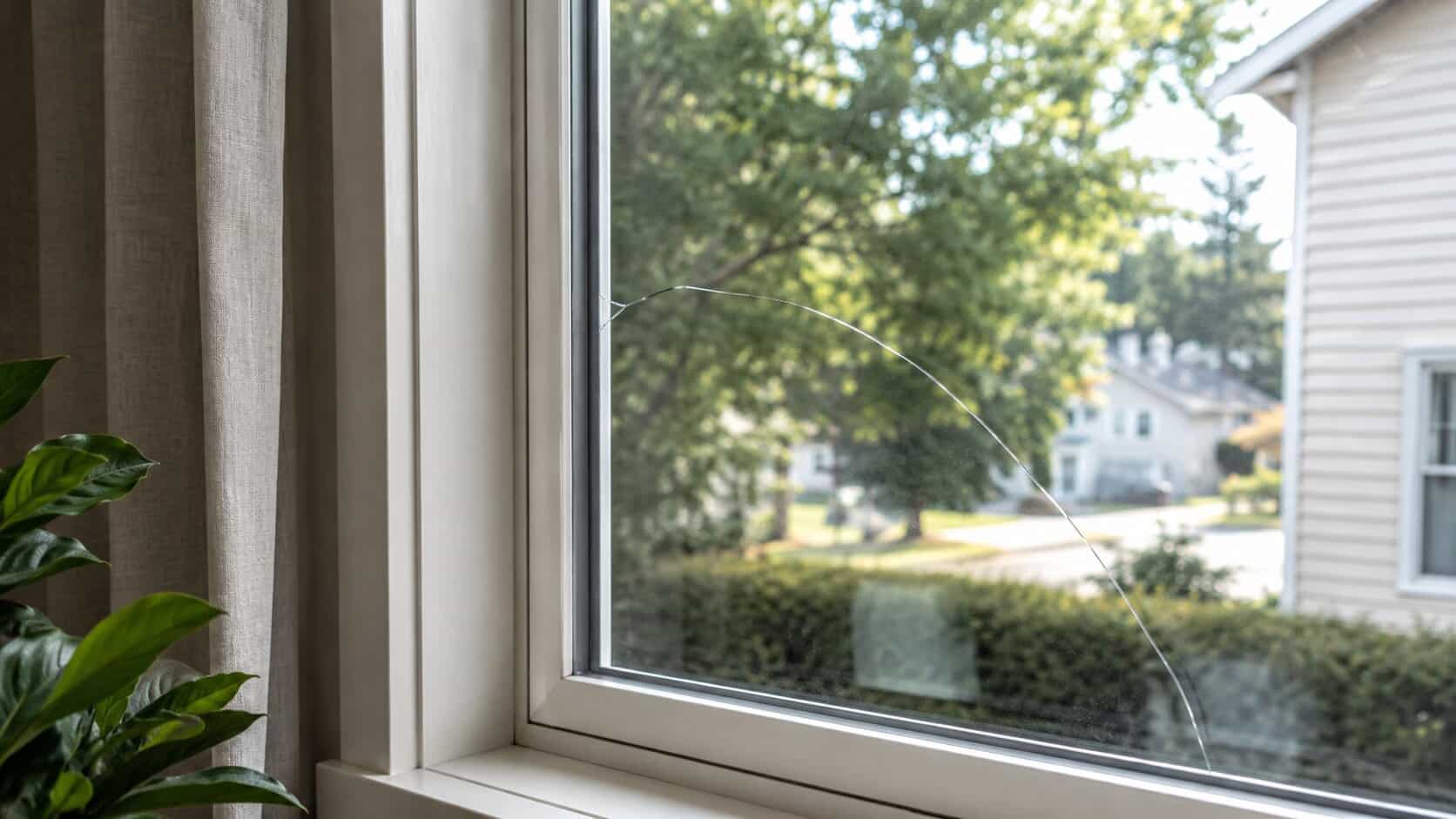
A window can appear to crack by itself when a thermal stress crack develops from uneven heating and cooling. Hidden edge damage, frame pressure, improper installation, building movement, or pressure inside an insulated glass unit can also overload the pane.
Less commonly, an imperfection in tempered glass may contribute. However, a technician must inspect the crack, glass edges, frame, and surrounding opening to confirm the likely cause.
Call Quality Window & Glass Repair LLC at (301) 531-0888 to request a free cracked-window inspection. You can also ask about same-day availability, depending on scheduling and replacement-glass availability.
Yes. “Cracked by itself” usually means no one saw an impact occur — not that no physical cause exists.
Damage often starts somewhere hidden: a small chip tucked under the frame, a stressed edge inside the sash, or a section of glass under constant pressure from the frame around it. That stress can sit quietly for weeks or months before a temperature swing, a gust of wind, or even a slammed door finally pushes it past its limit.
By the time the crack becomes visible, the original trigger may already have passed. As a result, the damage can appear spontaneous even though temperature stress, edge damage, pressure, or movement contributed to it.
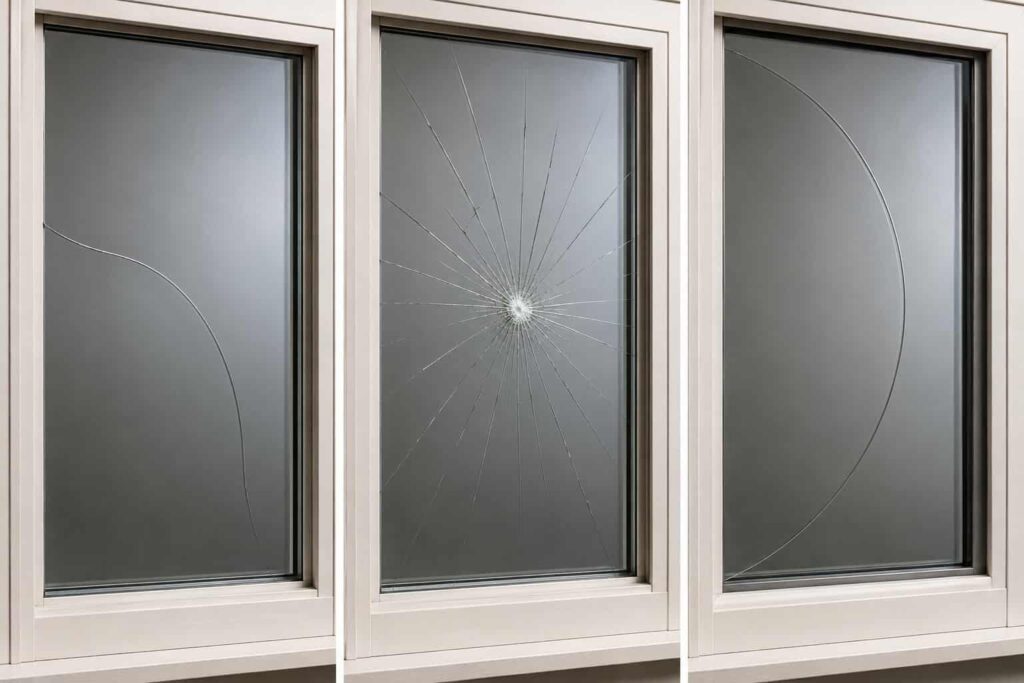
Most window cracks fall into one of a few recognizable categories. Industry guidance from Pella groups common window cracks into three broad categories: thermal stress cracks, impact cracks, and pressure cracks. Thermal stress cracks typically start at the edge of the glass and run inward, often related to temperature swings or shifting shade patterns on a building. Impact cracks usually radiate outward from a visible central point where the glass was struck. Pressure cracks in insulated windows tend to curve, similar to the shape of an hourglass, and are associated with elevation differences or sharp weather-pressure changes rather than a visible strike point.
| Crack Type | Common Appearance | Possible Cause | Recommended Next Step |
| Thermal-stress crack | Starts at the glass edge, runs in a fairly straight or gently curved line inward | Uneven heating/cooling, partial shade, sudden temperature swings | Professional inspection; glass-only replacement may be possible when the sash and frame remain sound |
| Impact crack | Starburst pattern radiating from a central strike point | Object striking the glass, even without a clearly seen impact | Inspection to confirm stability; replacement is typically needed |
| Pressure crack | Curved, hourglass-like pattern, no impact point | Elevation changes, sharp atmospheric pressure shifts affecting insulated glass | Inspection of the insulated glass unit; replacement of the sealed unit |
| Spontaneous tempered-glass breakage | Glass fractures into many small fragments | Possible manufacturing inclusion, though not confirmable by appearance alone | Full inspection and replacement of the tempered pane |
These cracks typically begin near the glass edge and move inward, sometimes curving or branching slightly as they extend across the pane.
An impact crack generally shows a visible center or strike point, with cracks branching outward from it — even if nobody saw the object that caused it.
Pressure-related cracking mainly affects insulated glass units and can look curved or unusual, without any obvious point of impact.
Tempered glass is designed to break into small, granular pieces rather than large shards. In rare cases, a manufacturing inclusion may contribute to spontaneous breakage — but that specific cause should not be assumed from appearance alone and generally requires a closer technical evaluation.
The National Glass Association explains that some inclusions, particularly nickel sulfide inclusions located within the tension region of tempered glass, may contribute to spontaneous breakage.
However, a shattered pattern alone cannot confirm a nickel sulfide inclusion or another manufacturing condition. A technician should examine the glass type, frame, surrounding opening, and available project records before drawing a conclusion.
When one section of a pane heats or cools faster than the rest, the glass expands or contracts unevenly. A significant temperature difference between parts of the glass surface creates internal stress, and if that stress exceeds what the material can tolerate, the glass cracks.
For example, overhangs, trees, blinds, exterior shadows from nearby structures, or furniture placed close to the glass can create a hot spot. Meanwhile, the rest of the pane may remain cooler, producing uneven expansion across the glass.
A small chip near the edge may result from a stray object, handling, cleaning, fabrication, or installation. Because the frame can conceal that damage, an ordinary temperature change may later cause the weakness to develop into a visible crack.
A tight, warped, or misaligned frame can place continuous pressure on the glass. Over time, moisture-related swelling, temperature-related movement, or minor shifting may increase the stress placed on the pane.
Uneven setting, incorrect spacing around the glass, or installation-related pressure can contribute to cracking — though this isn’t automatically the cause, and it shouldn’t be assumed without an inspection of the frame and glazing.
As a structure settles over time, window openings can shift by fractions of an inch. That’s often enough to transfer stress into the glass, particularly in older homes and buildings throughout the DMV.
In rare cases, an imperfection in the glass itself — most often discussed in relation to tempered glass — may contribute to spontaneous breakage. This possibility exists, but it requires professional evaluation rather than a guess based on how the crack looks.
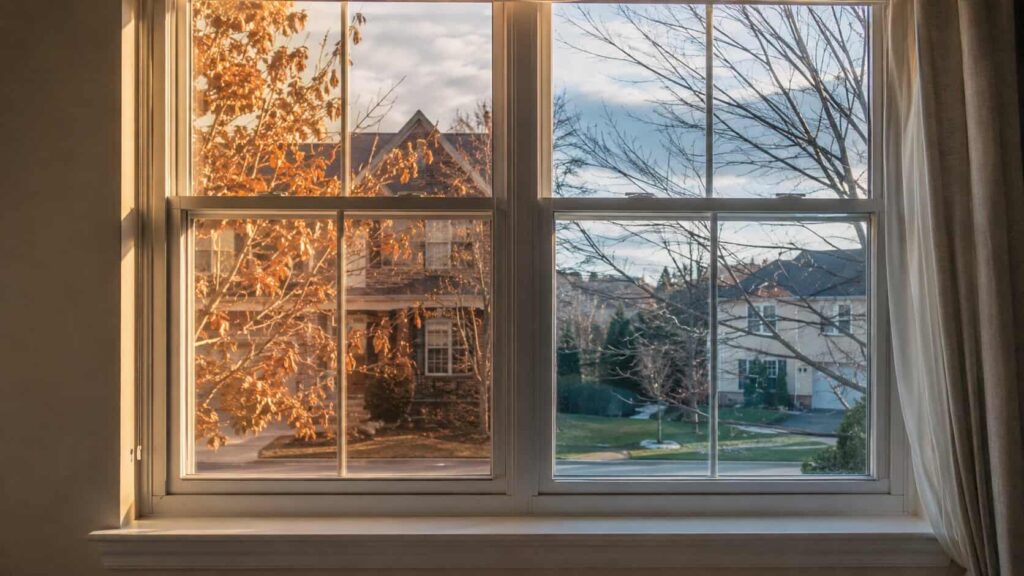
Maryland, Northern Virginia, and Washington, DC all experience hot, humid summers, cold winters, and sharp swings during spring and fall — exactly the kind of conditions that can expose a weakness that was already present in the glass, edge, seal, frame, or installation.
These conditions may be especially noticeable on large picture windows, partially shaded storefront panels, rowhouse windows, older insulated units, and panes that already have edge damage or frame pressure.
Relevant regional factors include:
Regional temperature changes can expose weaknesses that already exist in the glass, edge, seal, frame, or installation — they’re rarely the sole cause on their own.
An insulated glass unit (IGU) is built from two panes of glass separated by a spacer bar and sealed around the edges, with a layer of air or gas between them. Because each pane is a separate piece of glass, it’s possible for one to crack while the other stays completely intact.
This can happen because:
A single cracked pane is different from ordinary fogging between the panes. Fogging generally indicates that the insulated unit’s edge seal has failed, allowing moisture to enter the space between the panes.
When one pane cracks, a technician usually replaces the insulated glass unit as a complete sealed assembly. The spacer, seal, airspace, coatings, and two panes work together as one manufactured unit.
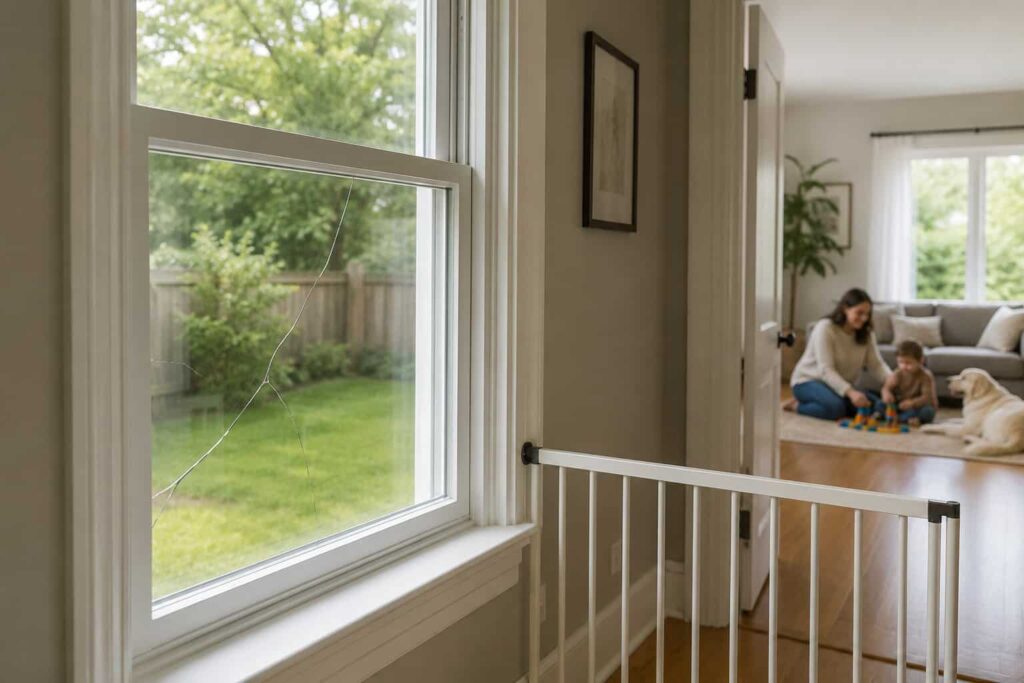
Some small, stable cracks allow time for a scheduled inspection. However, loose glass, actively spreading cracks, shattered panes, damaged door glass, or an unsecured opening can create an immediate safety or security concern.
The main risks include:
If the crack appears small and stable, restrict access and schedule an inspection. If the pane is loose, bowed, shattered, actively spreading, located in a door, or leaving the property unsecured, request urgent professional assistance.
Avoid attempting to remove, cut, drill, heat, or glue the glass yourself — a professional inspection is the safest way to determine what the pane and frame actually need.
Call (301) 531-0888 for emergency glass repair help or request emergency board-up service. Same-day availability may be possible depending on scheduling, access, and replacement-glass availability.
It depends on the glass type and the extent of the damage.
Therefore, a professional inspection is the most reliable way to determine whether the property needs glass-only replacement, insulated glass replacement, sash work, or complete-window replacement.
In many cases, yes. When the frame and sash remain structurally sound, a technician can often replace the glass or insulated glass unit without replacing the complete window. This approach may reduce the cost, disruption, and material involved, depending on the window design and glass specifications.
Glass-only replacement may apply to:
If the sash or frame shows warping, rot, or significant damage, replacing those components — or the full window — may be the more appropriate and longer-lasting solution.
| Condition | Likely Service | When It May Be Appropriate | What Must Be Inspected |
| Cracked pane, frame and sash in good condition | Glass-only replacement | Frame and sash are structurally sound and properly sized | Glass type, thickness, edge condition, opening dimensions |
| Cracked pane in an insulated unit, frame sound | Insulated glass unit replacement | Seal or one pane has failed but the sash holds the unit securely | IGU dimensions, spacer condition, glass coatings |
| Cracked glass plus warped or damaged sash | Sash replacement | Frame is sound, but the sash itself is compromised | Sash material, hardware, weatherstripping, fit within frame |
| Cracked glass plus frame damage or rot | Full-window replacement | Frame is no longer structurally reliable | Frame material, surrounding wall condition, moisture damage |
| Glass is shattered or opening is unsecured | Emergency board-up, then permanent replacement | Immediate safety or security concern | Stability of remaining glass, size and location of the opening |
The estimate depends on the glass type, pane dimensions, thickness, coatings, number of panes, safety-glass requirements, access conditions, frame condition, sash condition, and fabrication needs. Therefore, an on-site inspection and written estimate provide the most reliable project-specific information.
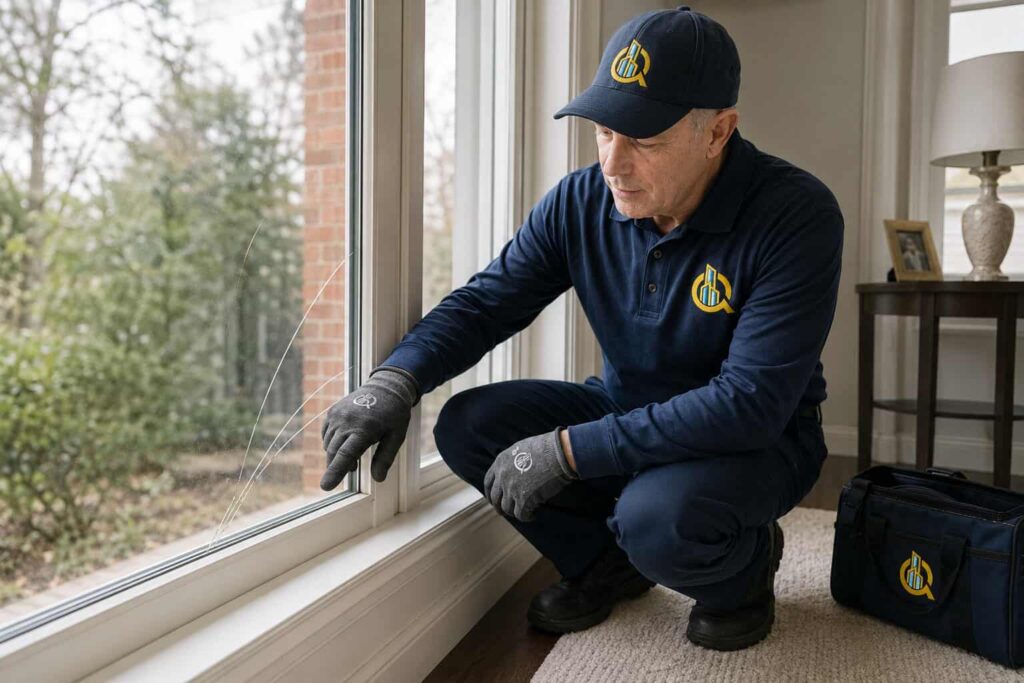
Unexplained cracks can show up in nearly any type of residential window, including:
In rental communities and condominium buildings, documenting the unit, window location, crack pattern, and date first noticed can help property managers coordinate inspection, tenant communication, and replacement.
The likely cause and recommended repair can vary based on the glass type, frame material, window size, sun exposure, and overall condition of the opening — which is why an on-site look at the specific window matters more than a general rule of thumb.
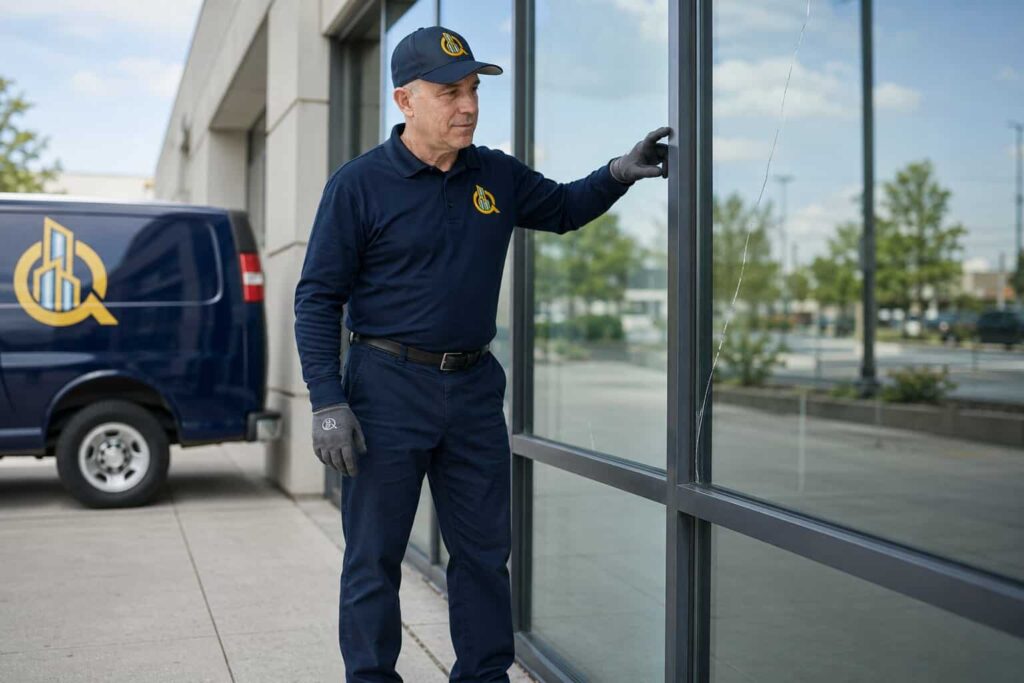
Businesses face their own version of this problem, often with added urgency around security and customer safety. Relevant situations include:
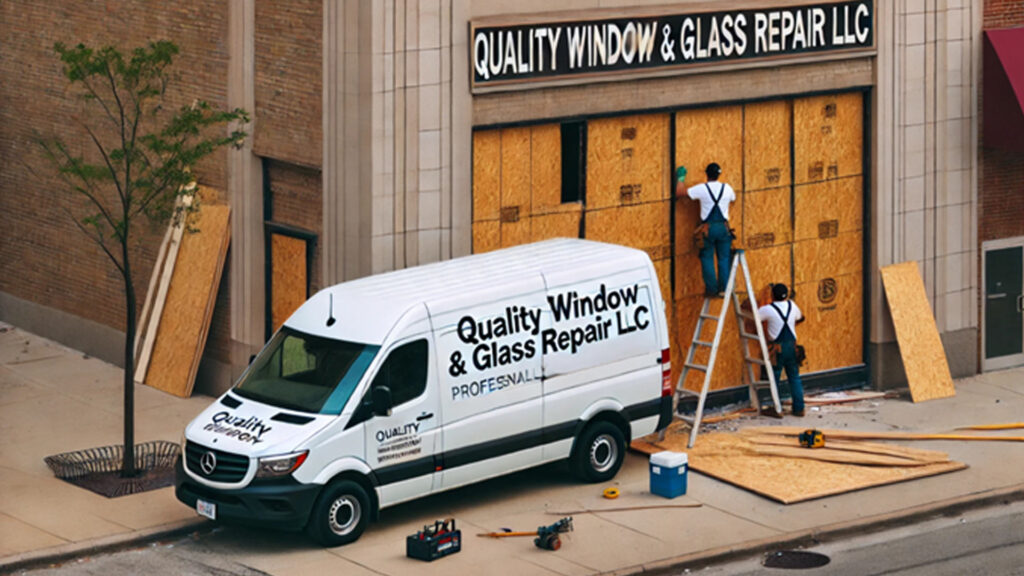
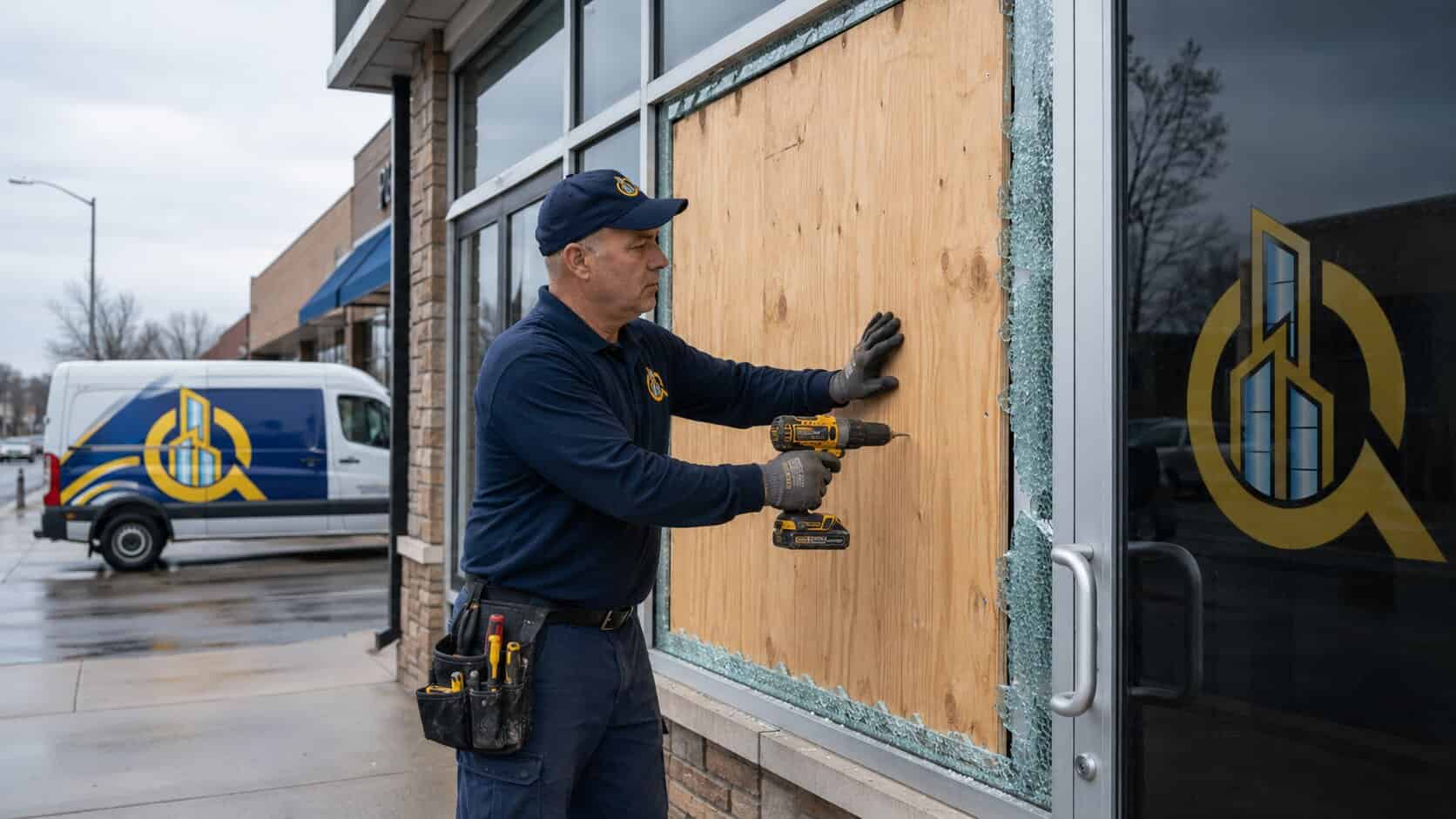
For business owners and property managers, the first priority is protecting employees, customers, tenants, and visitors. If the opening is unstable or unsecured, emergency board-up service can temporarily protect the property.
Next, document the damage for insurance, lease, or maintenance records. A technician can then inspect the frame, measure the opening, identify the required glass, and coordinate permanent replacement with the property owner, tenant, or building manager.
For contractors and facility teams, provide the glass company with available drawings, frame-system information, access restrictions, and required completion schedules. These details can help the technician identify the glass specification and coordinate temporary protection or permanent replacement more efficiently.
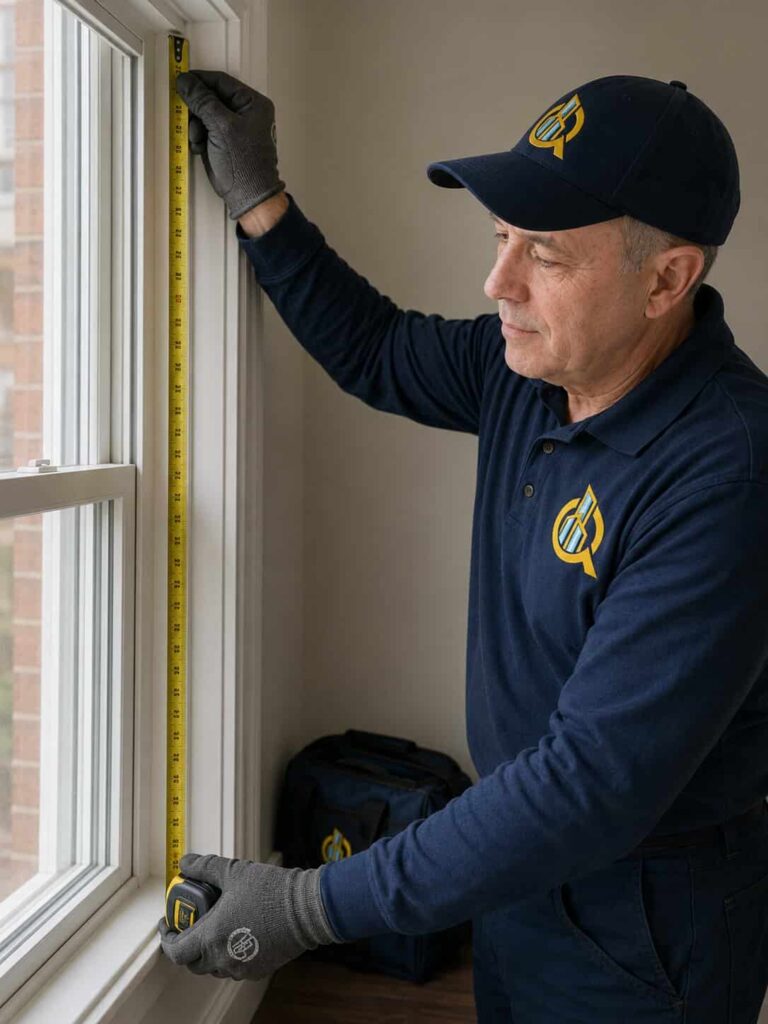
During an on-site inspection, we do not rely on the visible crack alone. We also examine where the crack begins, the exposed and concealed glass edges, sash alignment, frame pressure, spacer and seal condition, nearby heat sources, and any visible evidence of impact.
Unexplained window cracks show up throughout the Washington metropolitan area, where seasonal temperature swings, older housing stock, and a mix of residential and commercial glass systems all come into play. Our team serves homeowners, businesses, landlords, and property managers throughout Maryland, Northern Virginia, and Washington, DC.
We provide residential and commercial window glass repair throughout Montgomery County and nearby Maryland communities. Core service locations include Germantown, Gaithersburg, Rockville, Bethesda, Silver Spring, Potomac, North Bethesda, North Potomac, Montgomery Village, Olney, Damascus, and Clarksburg.
Our wider Maryland coverage also includes Chevy Chase, Kensington, Derwood, Darnestown, Poolesville, Laytonsville, Burtonsville, Ashton-Sandy Spring, Brookeville, Boyds, Barnesville, Dickerson, Frederick, and Columbia.
Our Falls Church branch supports homeowners, landlords, property managers, contractors, and businesses across Northern Virginia, including Alexandria, Arlington, Ashburn, Fairfax, Falls Church, Herndon, McLean, Reston, Sterling, Tysons, and Vienna.
In Washington, DC, we assist rowhouse owners, homeowners, apartment residents, landlords, office tenants, retailers, and commercial property managers with cracked residential, storefront, door, and office glass. Visit our Washington, DC window glass repair page for local service details.
A crack can appear without a visible impact when uneven heating and cooling, hidden edge damage, frame pressure, or building movement puts stress on the glass. A technician must inspect the crack, edges, and frame to confirm the likely cause.
A thermal-stress crack typically starts at the edge of the glass and runs in a fairly straight or gently curved line inward, without a visible impact point at its center.
Cold weather can contribute when one part of the pane cools much faster than another or when a rapid temperature change acts on glass that already has edge damage, frame pressure, or another weakness. Cold weather alone does not prove the cause.
Summer heat can contribute to a thermal stress crack when part of the pane receives intense sunlight while another part remains shaded or cooled from indoors. The resulting temperature difference may place uneven stress across the glass.
An overnight temperature drop may reveal a weakness that already existed in the glass, edge, seal, frame, or installation. However, the timing alone cannot confirm the exact cause, so the pane and surrounding frame should be inspected.
The two panes in an insulated glass unit aren’t always exposed to identical stress, so it’s possible for one pane to crack while the other stays intact. The full unit typically needs replacement in this case.
Yes. A tight, warped, or shifting frame can place ongoing pressure on the glass, which may contribute to cracking over time.
It’s common for a stress crack to grow over time, especially with continued temperature changes or vibration, which is why prompt inspection is recommended.
A small, stable crack may allow time for a scheduled inspection, but loose glass, spreading cracks, shattered panes, door glass, or an unsecured opening can create an urgent safety concern. Keep people away and avoid operating the affected window.
Do not press tape onto loose, bowed, shattered, or actively spreading glass. Keep people away and avoid operating the window. For a small, stable crack, ask the glass technician whether temporary containment is appropriate before touching the pane.
Most structural cracks require glass replacement rather than a permanent crack repair. A professional may temporarily stabilize certain small single-pane cracks, but a cracked insulated glass unit generally requires replacement of the complete sealed unit.
Often, yes. When the sash and frame remain structurally sound, a technician may replace the single pane or insulated glass unit without replacing the complete window. The window design, glass specification, and surrounding damage determine whether this option is suitable.
Cost depends on the glass type, dimensions, coatings, number of panes, and whether the frame or sash also needs attention, so a written estimate following an inspection is the most accurate way to know your cost.
Coverage varies by policy and cause, so it’s best to review your specific policy or speak with your insurer rather than assume a universal answer.
Yes, emergency board-up service is available throughout Maryland, Northern Virginia, and Washington, DC when an opening is unstable or unsecured.
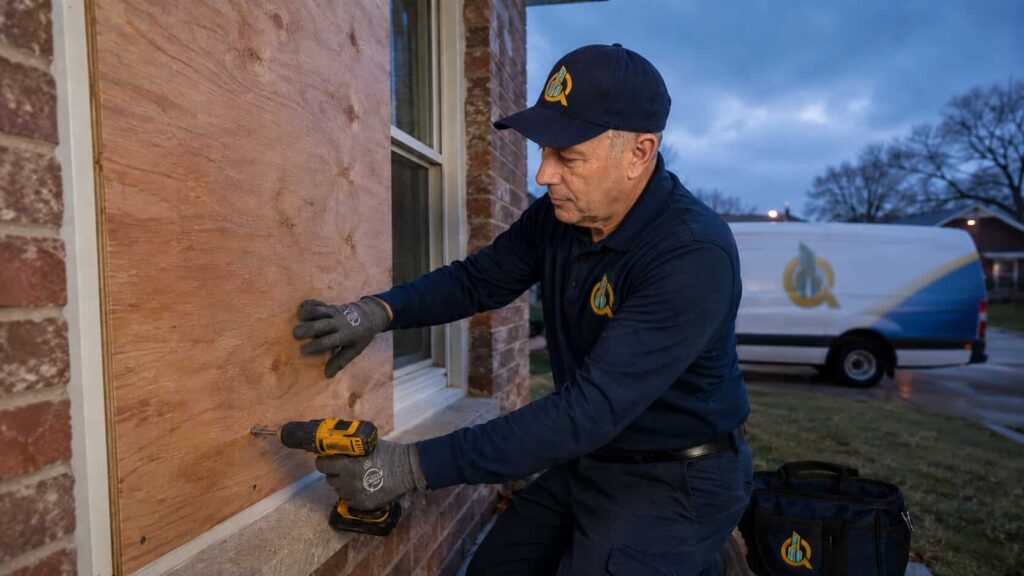
An unexplained crack deserves a professional inspection, both for safety and to identify the most practical replacement option. In many cases, a technician can replace the affected pane or insulated glass unit without replacing the complete window, provided the sash and frame remain serviceable.
Quality Window & Glass Repair LLC assists homeowners, landlords, property managers, contractors, and business owners across Maryland, Northern Virginia, and Washington, DC. We can inspect the damage, explain the likely contributing factors, and provide a written estimate, with emergency assistance available when an opening is unsafe or unsecured.
Call (301) 531-0888, request a free quote, or ask about same-day availability and emergency glass repair assistance.
We provide residential and commercial window glass repair, replacement, emergency board-up, and custom glass services across Germantown and the wider DMV Area. Contact our team to discuss your project and request a free estimate.
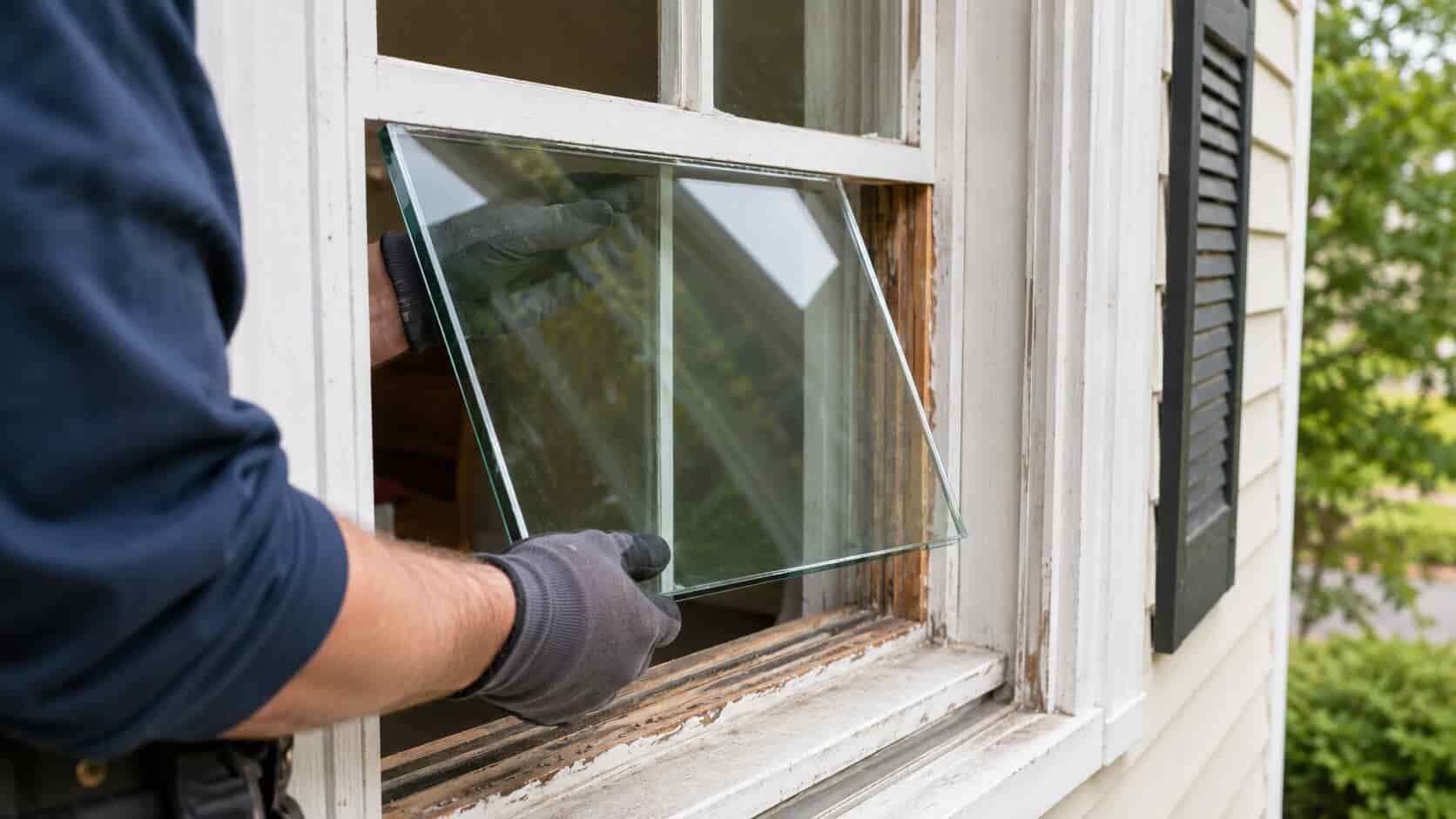





Experience the Quality Window & Glass Repair difference. We offer expert installation, repair, and replacement services for residential and commercial properties. Enjoy 24/7 emergency glass repair, backed by our 100% satisfaction guarantee.
Ready to get started? Call us today at (301) 531-0888 or schedule an appointment online.
Quality Window & Glass Repair services offers a wide range of glass services to meet your every need. From small repairs to large-scale installations, our experienced team has the expertise to handle any project. Whether it’s your home or business, we’re committed to providing exceptional service and high-quality results.